
Extract loss-event data from FNOL forms and supporting docs in minutes, not days
Claims intake is where insurers leak both time and accuracy. A First Notice of Loss arrives in a dozen formats — agent intake forms, broker emails, customer PDFs, police reports — and a junior adjuster has to read each one, key the data into the claims system, and route to the right specialist team. The slowest part of the entire claims lifecycle is the data entry on day one. DocumentIQ extracts policy number, loss date, claimant info, loss description, severity indicators, and supporting evidence references from every intake document and feeds the structured record straight into the claims platform. Adjusters start working the claim within minutes of receipt.
How claims processing runs on DocumentIQ
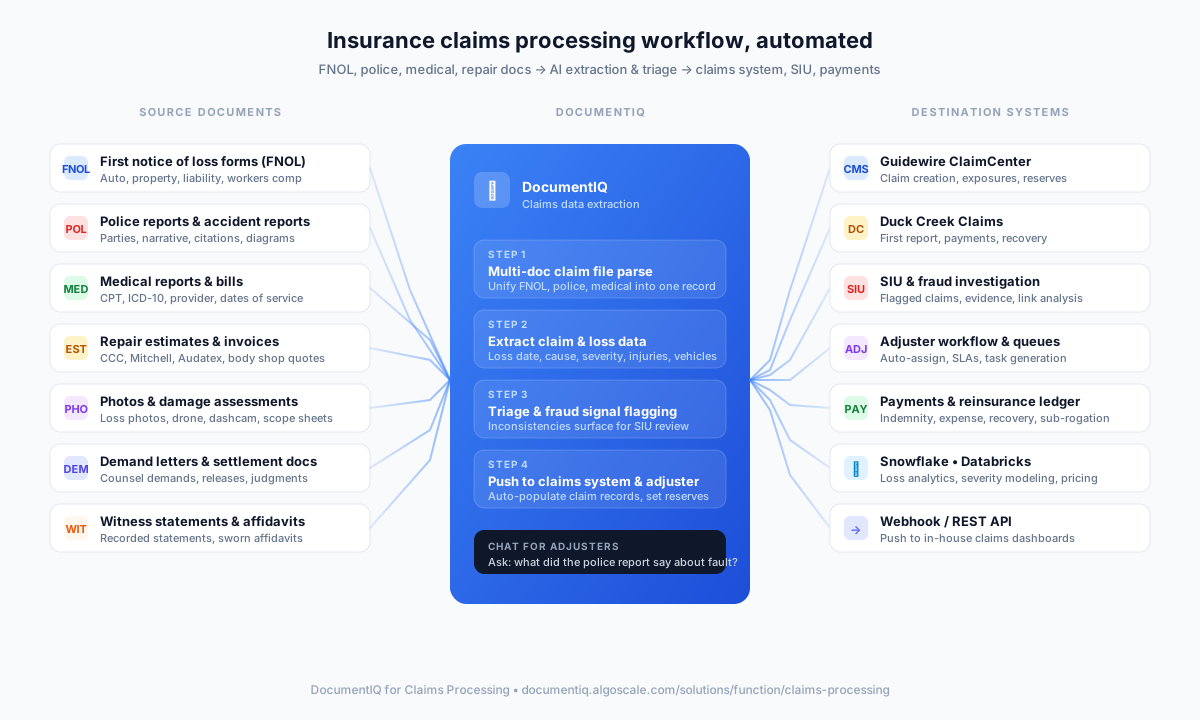
The end-to-end document path for claims processing — source files from your existing systems, AI extraction in DocumentIQ, structured data pushed to the platforms your team already uses.
The Challenges
FNOL data trapped in inconsistent intake formats
Agents submit on their forms. Brokers email PDFs. Customers fill web intake or send phone notes. Every channel has different fields in different orders, and a junior adjuster has to normalize manually.
Supporting evidence comes in late
Police reports, repair estimates, and medical records arrive over the next 10-30 days. Each one needs to be linked to the claim, parsed for relevant fields, and routed. Late evidence delays settlement.
Severity routing is reactive
Without structured loss data at intake, claims go to a generic queue and get reassigned later when severity is understood. The hand-off cost compounds, and the customer waits.
Audit trails for regulators
Property & casualty regulators expect every claim decision to be defensible. Spreadsheets and email threads do not provide the field-level traceability auditors demand.
How DocumentIQ Solves This
Multi-channel FNOL ingest
PDF intake forms, broker emails, scanned customer submissions, structured web forms — all flow into the same extraction pipeline. The model handles layout variance automatically.
Loss-event field extraction
Policy number, loss date, loss location, claimant info, loss description, severity indicators, estimated value. Annotation training handles carrier-specific intake form layouts.
Evidence linking
Police reports, repair estimates, medical records — extract relevant fields and link them to the existing claim record automatically. Adjusters see the complete picture without manual reconciliation.
Auto-routing by severity
Use extracted loss value, peril type, and damage indicators to route claims to the right specialist queue at intake — instead of after a junior adjuster manually triages.
Document types we extract for this function
Related services from Algoscale
Automate claims processing and policy document extraction
End-to-end AI strategy for claims modernization
Apply LLMs to P&C claims workflows
Integrate DocumentIQ with Guidewire, Duck Creek, or your in-house claims platform